ICT

Monday, December 24, 2012

Reuse Bottles for Windspinner

Recently, I was very interested in making windspinner using mineral water bottles and medicine bottles. I learnt a lot and got wonderful ideas from youtube, from different countries such as Japan, Taiwan and U.S.. Youtube is a good resource for any thing.

Front view of the big rainbow windspinner
 The wire is too long. So I decided to create a small one to attach to the other side. The design turned out well and it spins!
Side view of the windspinner


My first made windspinner!
The improved ones!

Hope to have more unique designs soon!

Tuesday, September 25, 2012

My Latest Additions


I am very happy to add 2 more new members in my toy collection.

Spinning tin top

I am supposed to hear a whistling sound but did not manage to produce that. Let me practise more.


Spinning Sparkler Thumb Wheel Plastic

I can use it for conversion of energy and also the concept, friction produced heat and light energy. Enjoy the 2 clips that I took.

Tuesday, September 4, 2012

A Great Article on Feedback

I like this article and we could use this for peer coaching with teachers too besides giving feedback to our pupils.

http://www.ascd.org/publications/educational-leadership/sept12/vol70/num01/Seven-Keys-to-Effective-Feedback.aspx

Science Beyond The Classroom Boundaries For 7-11 years old

This book is written by Lynne Bianchi and Rosemary Feasey. Again, there is always something new I learnt.

I gt to know about these 2 scientists, Charles Darwin and Beatrix Potter. What I shared below is adapted from the book mentioned.

Charles Darwin
Darwin created a path which traced the outskirts of the grounds of Down House in Kent, passing by hedgerows, a field and through woodland. He called this his ' Thinking Path' which was also known as the ' Sand Path'. His life was dominated by routine: he walked the path every day for an hour from midday, enjoying the physical exercise and solitude which allowed him space to think. His use of the path tells us a lot about how Darwin as a scientist worked: each day he would take time out to think, undisturbed, as he walked round his thinking Path.


Darwin's Thinking Path
 As he paced he mulled over his ideas, observations and results of his experiments, trying to make sense of them and making connections between ideas and types of knowledge. The fresh air, gentle exercise and rhythm of walking helped his thinking processes and it was during these walks that Darwin began to make sense of his personal theories that became the basics of his writing. He wrote his most famous books The Orgin of Species and The Descent of Man.

Today neuro-linguistic programming ( NLP) recognises that there is a link between mental processes and physical movement. Repetitive physical movements and activities involving major muscle groups such as walking, swimming, biking etc influence our overall state of mind and thus provide a more general context for our thinking processes.

Beatrix Potter
We can explore how knowing about Beatrix Potter can help us to introduce children in observing, collecting and recording plants and animals in the environment.


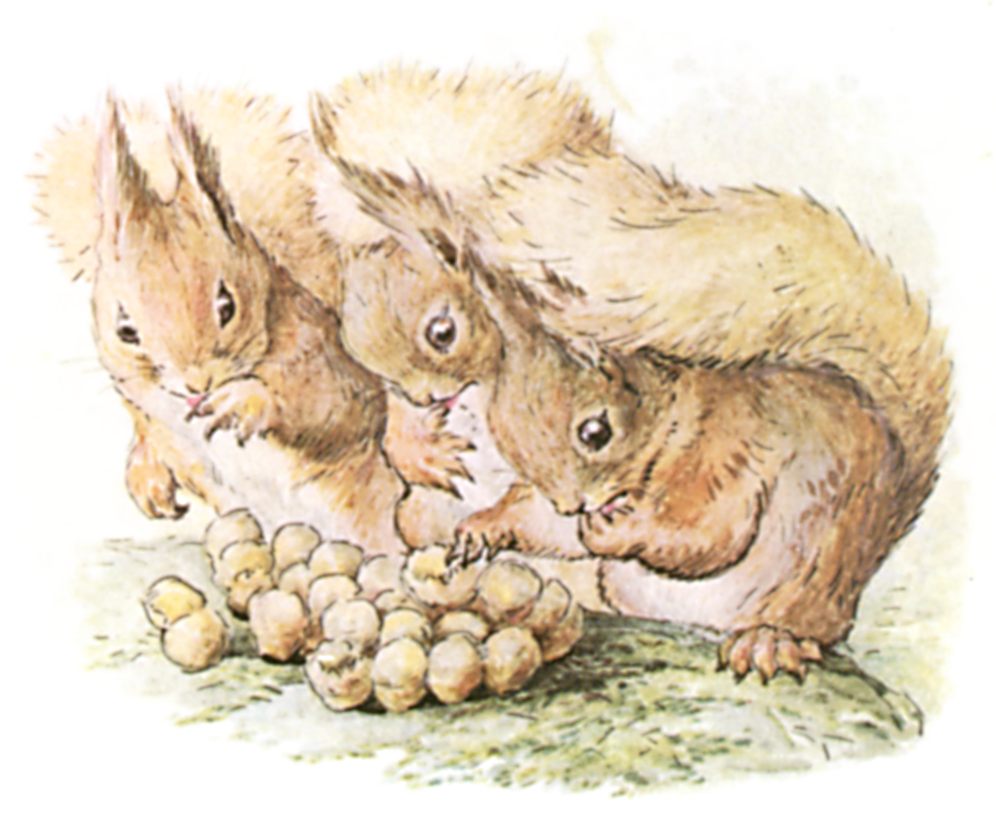
Beatrix Potter

She is famous for her children’s book. She spent her early years holidaying in Scotland and the Lake District, where she developed her love of plants, animals and landscapes. Most importantly she was some one who carefully observing her surroundings and was able to translate her observations into detailed and accurate drawings and watercolours.


Beatrix Potter also became a well-respected expert mycologist ( someone who studies fungi); indeed she created several hundred watercolours of fungi and wrote papers on germination of fungi. Later in life she became a farmer and avid conservationist, helping to form the landscape of the lake District that we are familiar with today ( Potter, 2006).


After reading more about Beatrix Potter, I immediately thought of using her as a role model for the pupils: someone who enjoyed the outdoors, was curious and carefully observed animals and plants, then used those observations to create detailed sketches, stories and also to write scientific articles. I came out a simple Power Point which I would like to show to my pupils how Beatrix used her observation skills to produce detailed drawings. Hopefully, pupils will get inspired by her and put more effort in their observational drawing and sketching in their activity books.

Sitooteries - Beatrix Potter Observation Points
I just discovered this lovely word which means somewhere to sit outside to relax, think about Science, observe the environment and sketch.

Saturday, August 18, 2012

Classification Of leaves

I always think it is a very easy topic till I collect their work. After all , it is not easy for them. I just discovered from the 2 educators, Nancy Frey & Douglas Fisher ,that there is a difference between error and mistake , and of course they emphasize the importance of giving feedback.


I have used all the pictures below to give feedback on their mistakes and errors in class.


The pupils went to the school garden to draw the leaves I chose. This is one that is well -drawn with all the details.


Pupil 1
 I guess the one of the left is a mistake. Pupil did not realise that he/ she overlooked C. As for the error on the right,  the pupil does not know what is parallel vein.

The next 2 pictures from pupil 2 & pupil 3 are full of errors. I actually re taught the whole class how to go about doing the classification wth a lot more scaffolding. I actually reflected why they made so many errors. As I said, I thought it is rather easy but it is not for them. They needed much more scaffolding and the original task is very open and allows divergent  thinking. Pupils could classify the leaves according to colours, leaf edge, leaf shape, leaf vein and size. So I modified the task and it became closed and allows convergent thinking. I got them to copy the classifiaction table and the heading of the classification and got them to classify the leaves. I was too ambitious. Pupils should master the basic before attempting the open task.


Pupil 2

Pupil 3
This is the only one with perfect work.


Tuesday, August 14, 2012

Using POE & Think pair share For Hydroponics Lesson

I really like POE ( Predict Observe Explain) strategy. I asked pupils to predict what would happen if we removed the roots of the vegetables. I also asked them to predict what would happen if we remove all the leaves. I , as well as the pupils, predicted the vegetables would die.

To my surprise, it turned out otherwise.


Roots removed a week before
 The vegetables did not die. So the pupils wrote the observation that the outer 3 leaves are drying and the inner 2 leaves are still surviving. One leaf was turning yellow. And we explained that the vegetables were not able to absorb water, thus they were drying up. The leaf turned yellow because it was not able to make food due to lack of water.

Earlier on, I got the pupils to do think pair share why the vegetables dried up. I heard the conversation of 2 boys. Lin Wei said, " No water". I asked, " There is water in the hydroponics system." Irrfan shared, " The plant has no roots." I asked the two of them to synthesize their 2 partial answers. They quickly answered that the vegetables did not have roots to take in water. I could see that both were happy to get their final answer. I am pleased with think pair share strategy.


All the leaves were removed a week before
 The leaf stalk with the leaves removed did not grow back the leaves. Instead new leaves grew from the stem. We explained that the new leaves grew because they used the food stored in the stem.

It is a great learning experience for both the kids and myself.

Saturday, August 11, 2012

Activity For Kinesthetic Learners

I have to get pupils to trace the flow of blood and the path that substances as they are transported by the human circulatory system. It is not easy for pupils to remember the concepts. I tried using this activity as shown below.


Our circulatory system!

I got the pupils to be the blood moving through the arteries and veins. When they were moving from the heart to the different parts of the body, they used handsigns like " O" and palm facing upwards to show that they were carrying oxygen and digested food. When they were moving through the veins, similarly, they used hand symbol " C" and palm facing down to represent carbon dioxide and waster.

Pupils enjoyed the activity and more importantly, they were able to remember the substances that are tranported in the different blood vessels through movements.